 EN
EN


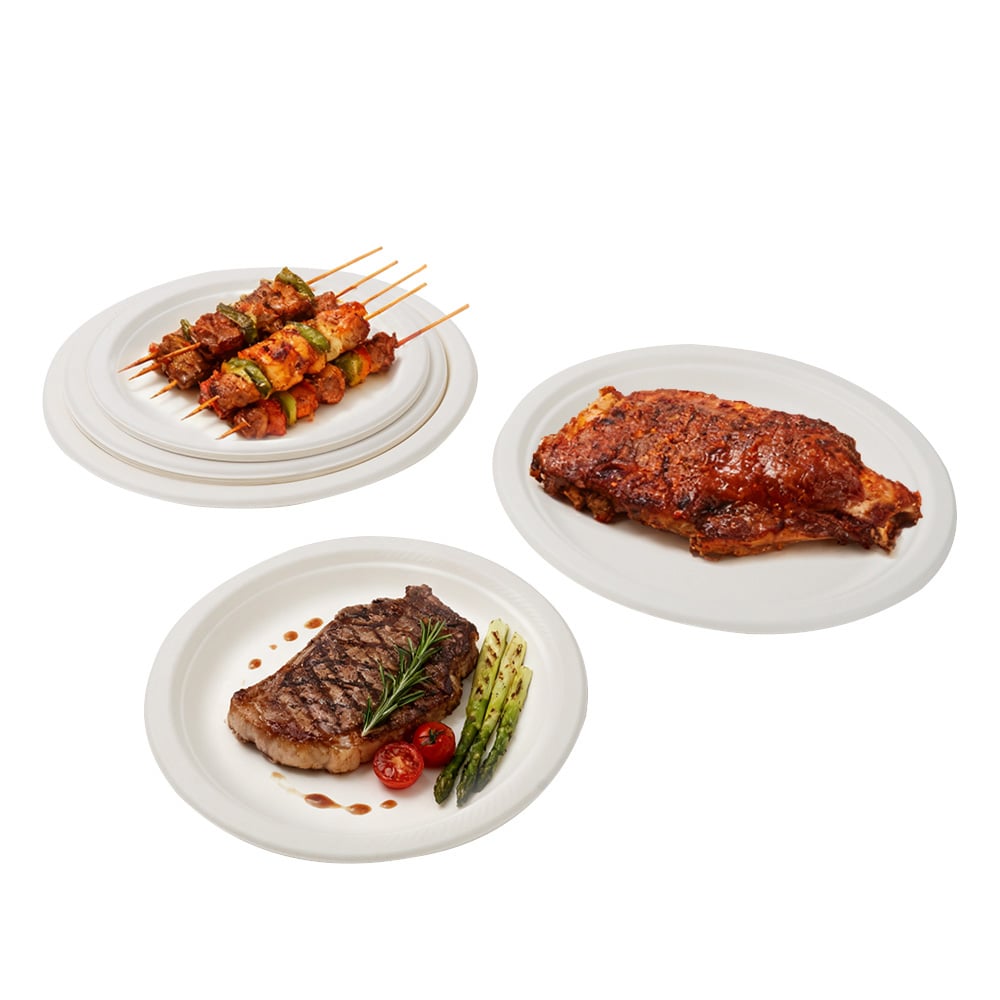
Regulatory Momentum: How Global Bans and Certifications Are Mandating Compostable Fast Food Boxes
Single-Use Plastic Bans in the EU, Canada, and U.S. Cities Driving Immediate Substitution
The regulatory landscape is shifting irrevocably. Globally, binding legislation is eliminating single-use plastics in food service, compelling operators to adopt certified alternatives like sugarcane bagasse food containers. The European Union’s Single-Use Plastics Directive (SUPD) reached full enforcement in 2025, mandating that all takeaway packaging be either reusable or compostable. Canada’s SOR/2022-138 took effect the same year, banning most non-certified plastic containers across the country. In the United States, progress is city- and state-led: California and New York have enforced strict bans on expanded polystyrene foam, while over 200 municipalities now prohibit conventional plastic clamshells. These bans are not gradual nudges—they are immediate market-access barriers. For quick-service restaurants and caterers, certified compostable packaging is no longer optional, but a licensing condition. Early switchers are leveraging this shift to secure supply chains and avoid costly last-minute scrambles.
EN 13432, BPI, and OK Compost: Why Certification Is Non-Negotiable for Market Entry
Regulatory pressure is matched by enforcement rigor. Simply claiming a box is “compostable” is no longer sufficient; third-party certification is now a legal and commercial prerequisite. In Europe, the EN 13432 standard is the benchmark, requiring more than 90% of the material to disintegrate within 12 weeks and fully biodegrade within six months under industrial composting conditions. In North America, the Biodegradable Products Institute (BPI) verifies compliance with ASTM D6400, while the OK Compost label from TÜV Austria serves as a global passport for market acceptance. These certifications are non-negotiable because they protect against greenwashing accusations—the U.S. Federal Trade Commission monitors environmental claims under truth-in-advertising laws, and uncertified packaging risks fines, product removal, and reputational damage. For food-service brands, securing EN 13432, BPI, or OK Compost marks is the only reliable way to demonstrate regulatory compliance, gain consumer trust, and access institutional and municipal purchasing channels that now demand zero-residue, fully compostable solutions.
Performance-Driven Adoption: Why Sugarcane Bagasse Food Containers Excel in Real-World Food Service
In the demanding environment of quick-service restaurants (QSRs) and food delivery, packaging must do more than simply hold food—it must protect it against heat, oil, and physical stress. Sugarcane bagasse food containers have emerged as a reliable alternative to plastic, backed by real-world performance data that validates their functional claims.
Heat Resistance, Oil Barrier, and Structural Integrity of Sugarcane Bagasse Food Containers at 120°C
Independent testing confirms that sugarcane bagasse containers maintain structural integrity at temperatures up to 120°C—making them suitable for hot soups, curries, and freshly fried items. Unlike conventional paperboard, which often relies on polyethylene linings, bagasse forms a natural oil barrier that prevents seepage without added chemicals. In a comparative study, containers made from sugarcane bagasse held up 20% better than standard paper alternatives when filled with greasy or saucy foods (Foodservice Packaging Trends, 2023). This oil resistance is critical for preventing leaks during delivery—a common failure point that damages brand reputation. Meal-kit providers reported 78% fewer container failures after switching to sugarcane bagasse for frozen entrées, thanks to its thermal buffering that withstands freeze-thaw cycles (2023 industry survey). The material’s inherent rigidity also resists buckling under stacking loads, ensuring lids stay sealed and food arrives intact. These performance attributes directly address QSR operators’ top concerns: consistency, safety, and customer satisfaction.
Compostable vs. Biodegradable vs. Recyclable: Clarifying Functional Claims for QSR Decision-Makers
For QSR decision-makers, the terminology around sustainable packaging can be confusing. “Biodegradable” is a broad, unregulated term that does not specify a timeline or end-of-life environment—a product might degrade in a landfill over decades yet still be labeled biodegradable. “Recyclable” applies to materials like traditional plastics that can be reprocessed, but contamination from food residue often renders them unrecyclable in practice. In contrast, “compostable” means the material breaks down into non-toxic, nutrient-rich soil within a defined timeframe under industrial composting conditions—as verified by standards like EN 13432. Sugarcane bagasse containers are inherently compostable and typically free from PFAS coatings, aligning with both regulatory mandates and the functional needs of food service. This clear distinction ensures operators can confidently communicate sustainability efforts without risk of greenwashing—and supports the shift toward truly circular packaging solutions.
Market Pull: Consumer Preference, Brand Differentiation, and Operational ROI
73% of U.S. Consumers Prioritize Eco-Friendly Takeout Packaging — and Will Pay a Premium (NielsenIQ, 2023)
Consumer demand is a primary engine behind the shift to compostable fast food boxes. A 2023 NielsenIQ study found that 73% of U.S. consumers prioritize eco-friendly takeout packaging—and a significant portion are willing to pay a premium. For food service operators, switching to materials like sugarcane bagasse food containers moves beyond a cost center to become a revenue driver. This consumer pull creates a clear market signal, rewarding brands that align with their values and penalizing those that lag behind.
How Early Adopters Achieve Brand Loyalty and ESG Reporting Wins with Compostable Packaging
The adoption of compostable packaging offers strategic advantages beyond the immediate sale. It fundamentally reshapes brand perception by altering how consumers view a product’s benefits—even among functionally similar offerings. This differentiation fosters deep customer loyalty, a critical metric where leading companies grow revenues faster than industry peers. The operational return on investment is measurable, strengthening quantifiable ESG reporting wins. By integrating compostable fast food boxes into their operations, forward-thinking businesses build a brand narrative that resonates with modern consumers—converting a packaging choice into enduring market share and shareholder value.
The Infrastructure Reality Check: Bridging the Gap Between Compostable Boxes and Industrial Composting Access
The environmental promise of compostable fast food boxes—particularly those made from sugarcane bagasse—collides with a stark infrastructural reality. A material’s theoretical ability to biodegrade is meaningless without a dedicated system to process it. According to recent market analysis, effective circular processing rates for compostable packaging may fall below 30–40% of the volume placed on the market in regions lacking robust composting networks. This massive gap between product design and waste management reality means the majority of these materials are still diverted to landfills, where they decompose anaerobically and release methane gas—negating their intended climate benefit.
For QSR decision-makers, this creates a critical question: does adopting sugarcane bagasse food containers provide a genuine environmental solution, or does it simply shift the waste burden without a compliant end-of-life pathway?
The limited availability of industrial composting facilities creates a systemic bottleneck. Many municipalities lack the high-temperature, controlled environments necessary to fully break down certified compostable materials within a standard 12-week cycle. The core issue is not just the number of facilities, but contamination of the waste stream. When even one non-compostable plastic item enters a batch of compostable packaging, it can render the entire load unusable for creating high-quality compost. This forces composting operators to reject entire loads of organic waste—often sending what consumers conscientiously separated directly to incineration or landfill.
Bridging this gap requires coordinated action: standardized labeling to prevent consumer confusion, public-private investment in local processing infrastructure, and legislation that mandates organic waste collection alongside the sale of compostable products.
FAQ
What is the difference between compostable, biodegradable, and recyclable packaging?
Compostable packaging breaks down into non-toxic, nutrient-rich soil under industrial composting conditions within a set timeframe. Biodegradable packaging can degrade naturally over varying timeframes, which may span decades. Recyclable materials are reprocessable but often fail due to contamination.
Why is certification such as EN 13432 or BPI important?
Certification ensures compostable claims are credible and enforces compliance with established standards, protecting against greenwashing and regulatory penalties.
What are sugarcane bagasse food containers?
Sugarcane bagasse containers are compostable packaging alternatives made from by-products of sugar refining processes. They boast exceptional heat, oil, and structural resistance.
What challenges exist in the composting infrastructure?
A lack of industrial composting facilities and contamination in waste streams limit effective recycling of compostable packaging, often sending them to landfills instead.
Table of Contents
- Regulatory Momentum: How Global Bans and Certifications Are Mandating Compostable Fast Food Boxes
- Performance-Driven Adoption: Why Sugarcane Bagasse Food Containers Excel in Real-World Food Service
- Market Pull: Consumer Preference, Brand Differentiation, and Operational ROI
- The Infrastructure Reality Check: Bridging the Gap Between Compostable Boxes and Industrial Composting Access
- FAQ


