An airline catering company serving several carriers prepares tens of thousands of meals a day. As civil aviation accelerated its green transition and airlines tightened ESG disclosure, its clients issued a common demand: de-plasticize single-use items onboard. Plastic boxes in premium cabins and PS cutlery in economy had to be replaced with degradable alternatives within two years. In-flight service imposes far stricter demands than ground catering — lightweighting, thermal stability, safety compliance and a premium finish are all non-negotiable.
Weight sensitivity came first: airline catering is loaded by the gram, and heavier tableware translates directly into fuel cost. The products had to withstand the full temperature cycle from chilled storage to onboard oven reheating without deforming. Materials required complete food-contact compliance and adherence to aviation catering hygiene norms. Finally, premium cabins demanded a refined tactile quality — smooth edges, fine surfaces and the ability to carry embossed airline insignia.
Solution
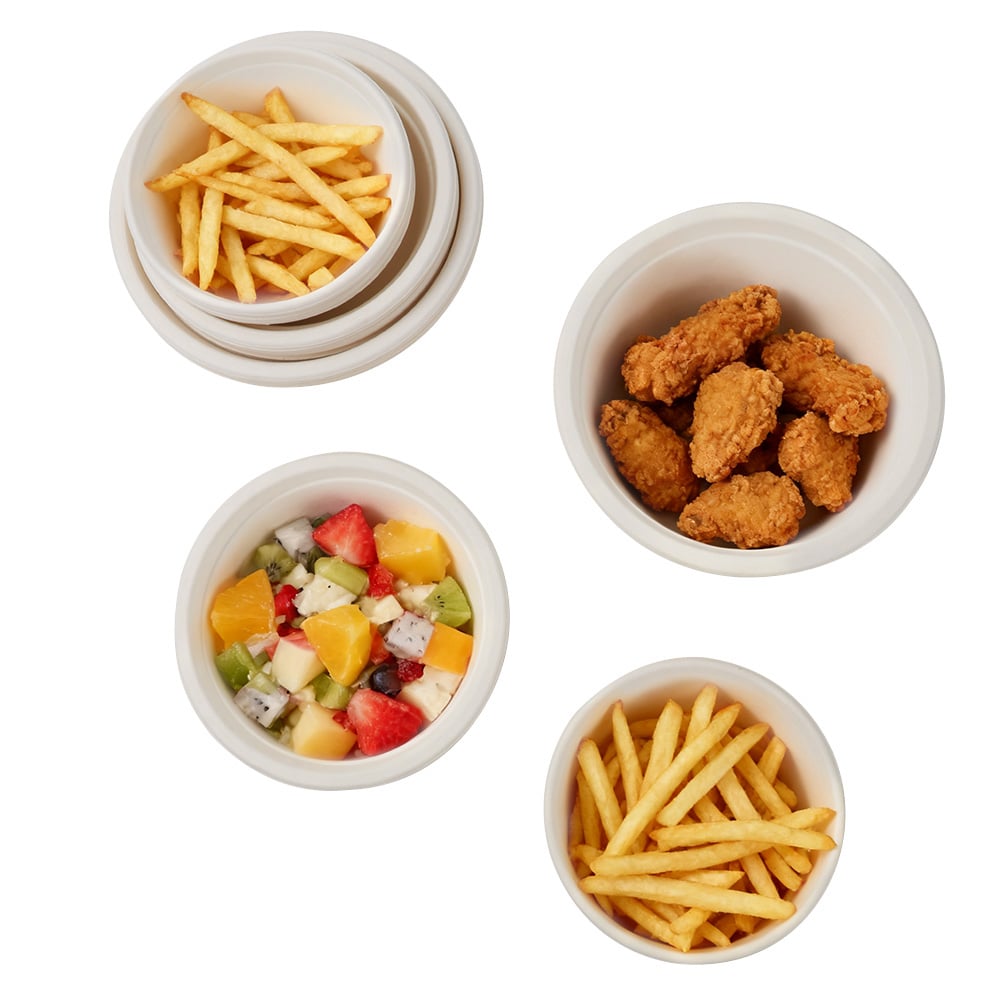
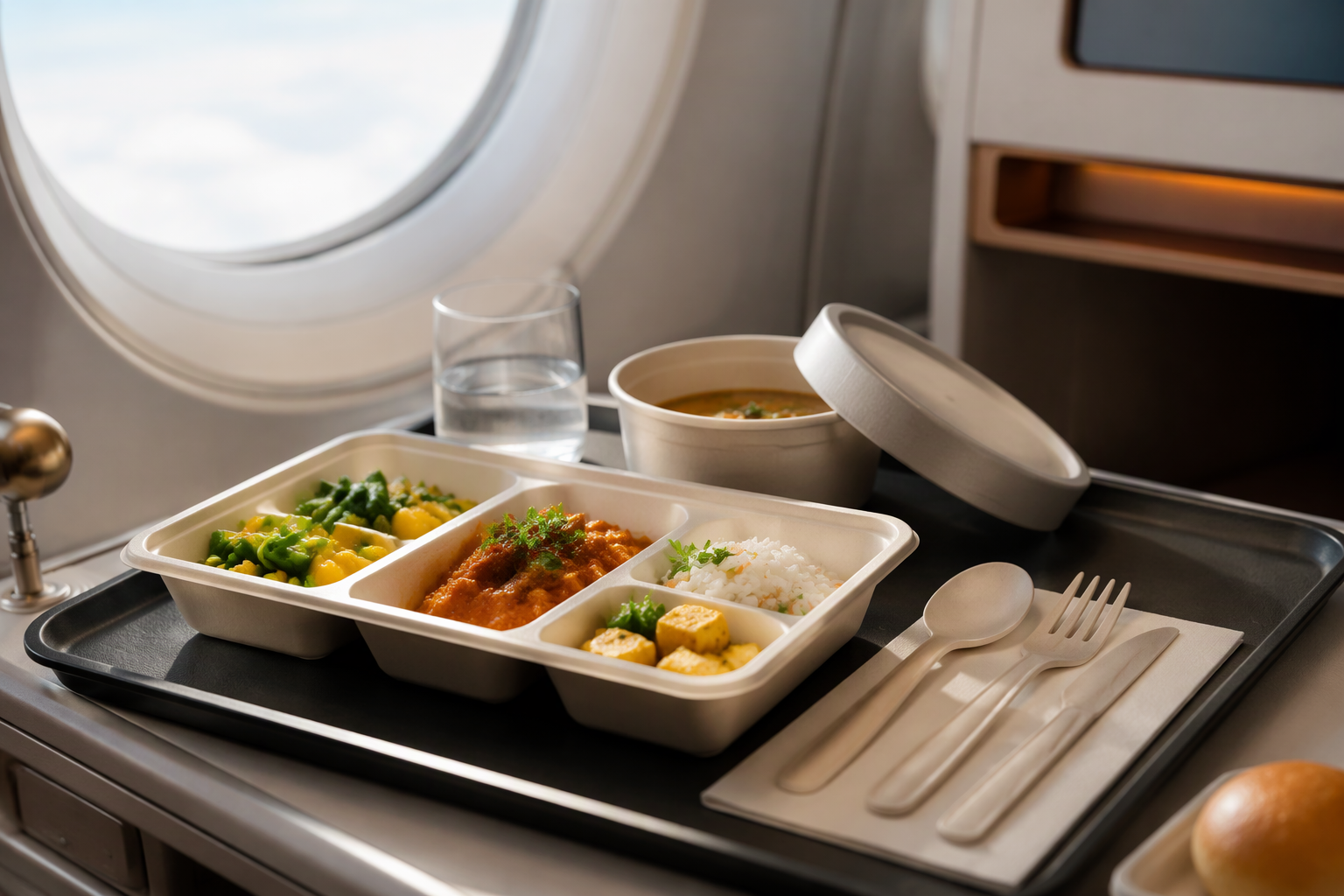
Yangbo formed a dedicated project team and proposed a cabin-tiered system. Economy service uses standard bagasse compartment plates and lidded containers, with one-pass molded compartments eliminating multi-piece assembly. Business and first class receive high-density refined-pulp products with polished surfaces approaching a porcelain-like feel, customized with embossed airline logos in the mold. The cutlery set — knives, forks and spoons — was upgraded with reinforced rib designs to guarantee cutting and scooping strength. All items undergo batch-level microbiological and physical testing with a complete food-contact compliance file, and samples passed multiple high/low temperature cycling tests against oven-reheat conditions. Packing was customized to galley trolley dimensions for cold-storage stacking and line-side picking.
After rollout, single-use plastic consumption across the caterer's operations dropped substantially, the company cleared green supply-chain audits from multiple airlines, and it won re-catering contracts on two new routes. The lightweight design kept per-set weight on par with the items it replaced, adding no meaningful payload. The embossed premium plates were picked up as brand-visual material by one carrier. Phase two is already in motion, extending the replacement to cold-drink cups and fruit trays.
Yangbo is a manufacturer of sugarcane bagasse tableware and biodegradable food packaging, offering eco-friendly disposable containers, bowls, plates and custom solutions.
Mayuan Industrial Zone, Shuitou Town, Wenzhou, Zhejiang Province
Room 315, Building 2, No. 1866 Binxing Road, Changhe Street, Binjiang District, Hangzhou City, Zhejiang Province
2nd Floor, Zone 4, Yiwu International Trade City, Zhejiang Province
Copyright © 2026 by Zhejiang Yangbo Technology Environmental Protection Co.,Ltd Privacy Policy
 EN