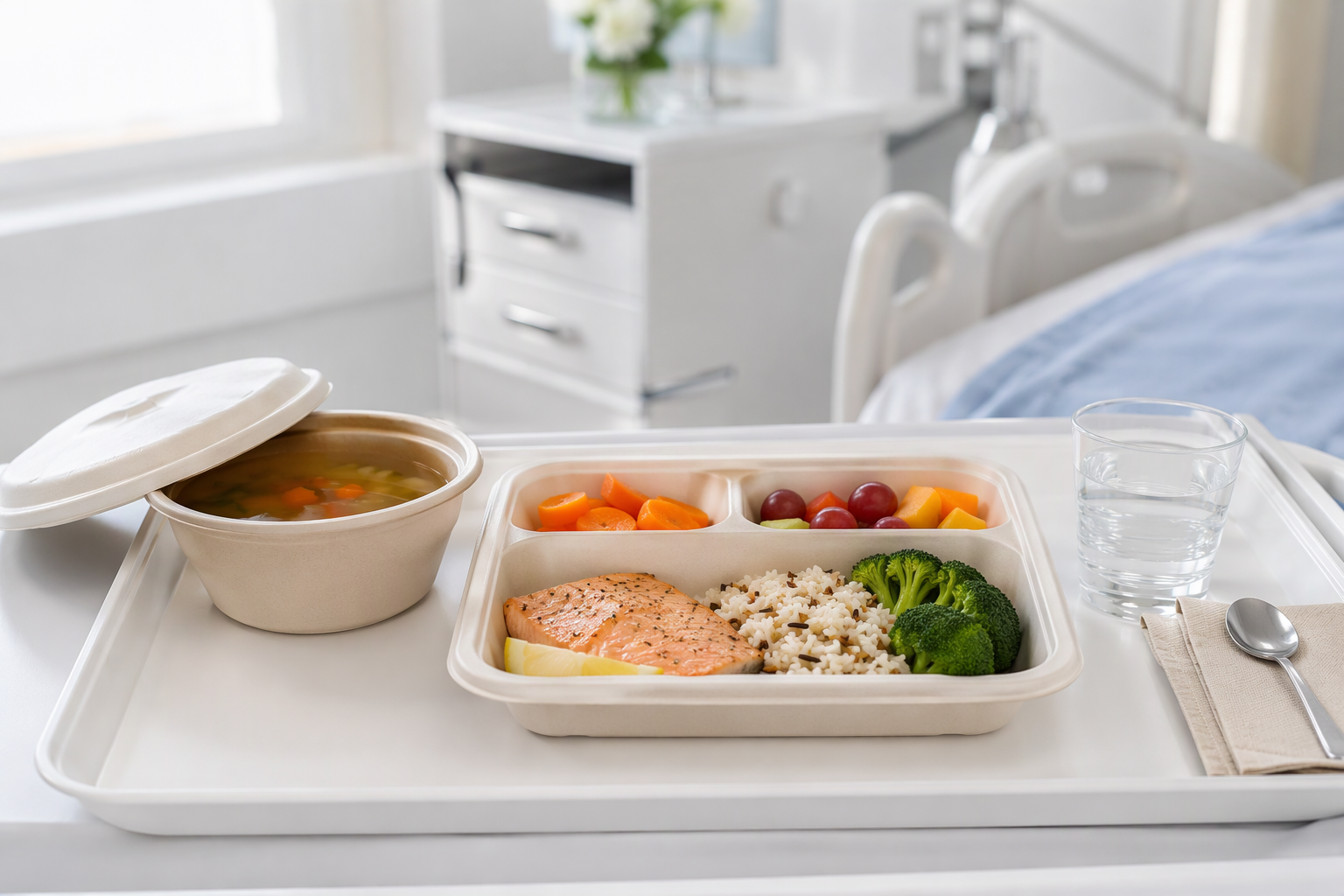
The nutrition department of a top-tier (Grade III-A) hospital serves over 2,000 patient meals daily, using a mix of repeatedly sterilized melamine trays and some single-use plastic boxes. As infection-control management tightened and support services were restructured, hospital leadership decided to convert all ward nutrition meals to single-use degradable tableware — eliminating cross-contamination risk at the reuse stage, reducing sterilization workload, and setting a plastic-reduction example as a public institution.
Hospital standards left no room for compromise. Hygiene came first: food-grade materials, individually or semi-individually wrapped, single-use only. Function had to match clinical meal types — liquid-diet bowls, semi-liquid lidded bowls and standard compartment plates — all microwave-safe. Thermal performance mattered too, since ward trolleys transport meals over long corridors: containers had to retain heat, resist spillage and stack stably. On the procurement side, the supplier needed complete qualification documents, test reports and proven monthly supply capacity.
Yangbo customized a "ward-by-ward, meal-type-by-meal-type" product program. Liquid and semi-liquid diets use 500 ml lidded bagasse soup bowls with tight-sealing lids that prevent spills and odor transfer; standard therapeutic meals use three-compartment plates with grease-resistant covers; and special diets such as diabetic meals use dedicated boxes with embossed identification marks to help dietitians verify distribution. All products are made from food-grade bagasse pulp with fluorine-free coatings, each batch shipped with factory inspection reports and outer cartons coded by ward floor for direct delivery to pantry stations. For audit purposes, Yangbo provided a complete filing package — food-contact test reports, microbiological certificates and raw-material traceability records — and established monthly scheduled deliveries with an emergency replenishment mechanism.
In the first six months after conversion, the department recorded zero hygiene complaints linked to tableware, and the removal of melamine reprocessing reduced both workload and energy consumption in the sterilization supply center. The lidded bowl's anti-spill design noticeably cut transport losses and eased cleaning-staff workload, while compartment plates helped nurses verify meal types faster, lowering meal-distribution errors. The hospital has cited the project as a flagship case in its "green hospital" initiative and plans to extend the conversion to staff canteens and family-companion meals.
Yangbo is a manufacturer of sugarcane bagasse tableware and biodegradable food packaging, offering eco-friendly disposable containers, bowls, plates and custom solutions.
Mayuan Industrial Zone, Shuitou Town, Wenzhou, Zhejiang Province
Room 315, Building 2, No. 1866 Binxing Road, Changhe Street, Binjiang District, Hangzhou City, Zhejiang Province
2nd Floor, Zone 4, Yiwu International Trade City, Zhejiang Province
Copyright © 2026 by Zhejiang Yangbo Technology Environmental Protection Co.,Ltd Privacy Policy
 EN