 EN


What Is Sugarcane Bagasse—and Why Is It Ideal for Food Containers?
From agricultural waste to premium packaging: the sustainable production process
Sugarcane bagasse is the dry, fibrous residue left after sugarcane stalks are crushed to extract juice. Once treated as low-value agricultural waste—often burned or landfilled—it’s now a high-performance, renewable feedstock for molded fiber food containers. The production process involves pulping bagasse, then molding and drying it into clamshells, trays, bowls, and more. Rich in cellulose, hemicellulose, and lignin, bagasse delivers natural structural integrity without petroleum-based binders or plastic coatings. With roughly 100 million tons generated annually from global sugarcane processing, this material leverages an existing by-product stream—requiring no additional cropland, logging, or virgin fiber. The result is lightweight, durable, compostable packaging that transforms waste into a premium, functional alternative to plastic and foam.
Inherent material advantages: compostable, microwave-safe, and heat-resistant up to 120°C
Bagasse excels where sustainability meets performance. Its molded-fiber structure naturally resists grease and moisture, eliminating the need for plastic linings in most applications. Containers are microwave-safe, freezer-safe, and heat-resistant up to 120°C (248°F), supporting direct reheating of soups, curries, and sauced meals—without warping or leaching. Unlike thinner plastics, bagasse maintains rigidity and stackability while remaining porous enough to break down efficiently under industrial composting conditions. Certified bagasse containers typically decompose within 60–90 days in commercial facilities, leaving no microplastic residue. These properties make it a practical, drop-in replacement for polystyrene and single-use plastic—especially in settings with access to industrial composting infrastructure.
Environmental Impact: How Sugarcane Bagasse Food Containers Reduce Waste
Lifecycle advantage: lower carbon footprint vs. plastic and virgin paper alternatives
By repurposing crop residue instead of discarding it, bagasse closes a critical waste loop. Production emits approximately two-thirds less carbon than conventional plastic manufacturing, according to peer-reviewed research published in the Journal of Cleaner Production (2021). Unlike virgin paper packaging—which requires fresh wood fiber, high water use, and chemical bleaching—bagasse relies solely on stalks already harvested for sugar. This eliminates added harvesting pressure and slashes upstream resource demand. Because the material is plant-based, it also sequesters carbon during growth, locking it in place throughout the container’s useful life. For foodservice operators, switching to bagasse offers an immediate, measurable reduction in Scope 3 emissions—without disrupting kitchen workflows or service speed.
Certified compostability (ASTM D6400/EN13432) and real-world degradation in <90 days
Look for ASTM D6400 or EN 13432 certification—globally recognized standards confirming safe, complete biodegradation in industrial composting environments. Bagasse consistently meets both, verified through third-party testing. In real-world commercial composting facilities, certified bagasse containers degrade fully within 60 to 90 days. That’s in stark contrast to conventional plastics, which persist for centuries. These certifications also verify absence of heavy metals and plant-toxic residues, ensuring compost output is safe for soil health. When diverted from landfill to composting streams, bagasse packaging helps reduce methane emissions from anaerobic decomposition—and simplifies front-of-house sorting, since food-soiled containers require no rinsing before collection.
Functional Performance: Leak Resistance, Stackability, and Thermal Retention
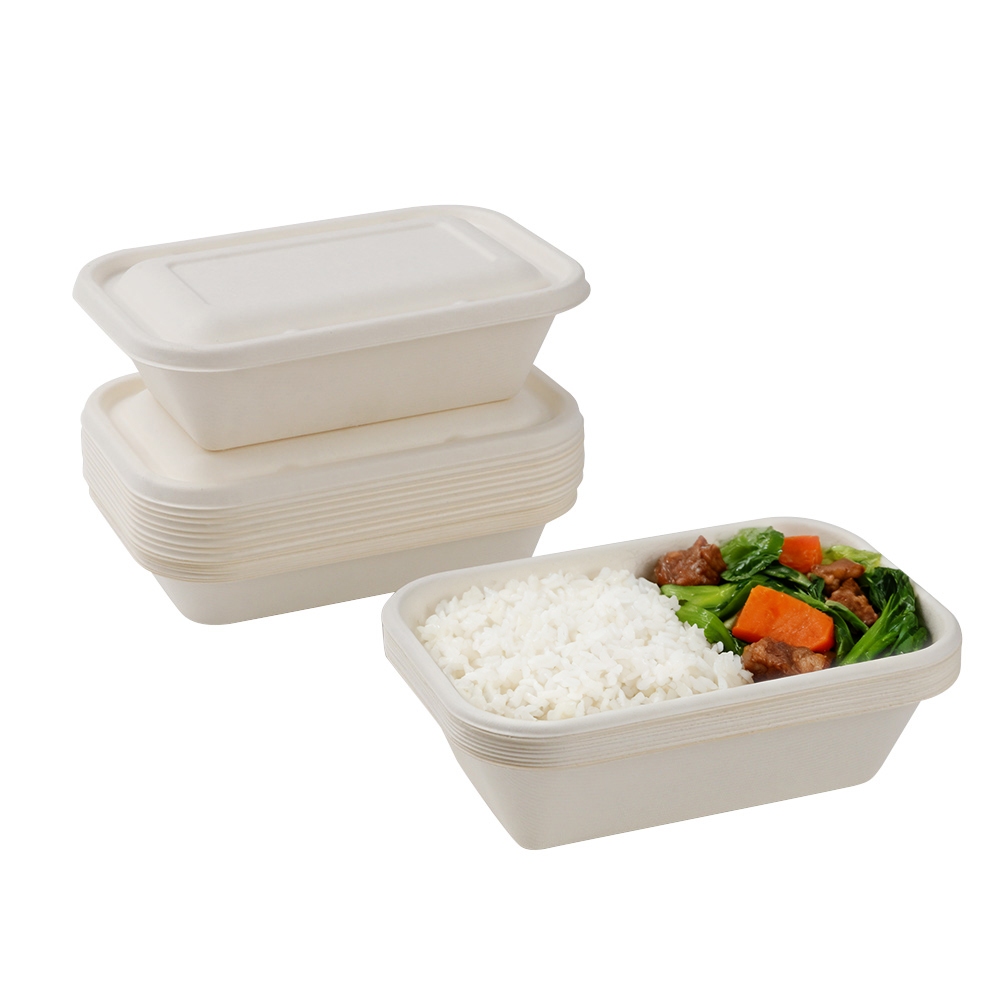
Sugarcane bagasse food containers with lids must deliver reliability in real-world foodservice operations—not just environmental credentials. Their dense, molded-fiber construction provides inherent resistance to oil and water penetration, preventing leaks from soups, sauces, dressings, and hot entrées during transport and display.
- Leak resistance: Tight-fitting lids and reinforced rims maintain structural integrity over standard holding times—even with hot, oily foods—without delamination or softening.
- Stackability: Standardized shapes, flat lid surfaces, and reinforced edges allow filled containers to stack securely in delivery bags, cold cases, and pass-through stations—reducing pack time and optimizing storage space.
- Thermal retention: Withstanding food contact up to 120°C and offering superior insulation to single-wall plastic clamshells, bagasse keeps hot dishes service-ready while keeping exteriors safer to handle.
These functional strengths position bagasse as a high-performing, scalable alternative to expanded polystyrene and plastic-coated paper across high-volume kitchens, delivery services, and institutional foodservice.
Versatile Applications Across Foodservice: From Portion Control to Branded Delivery
Design flexibility: clamshells, bento boxes, sauce cups, and custom-printed lids
Bagasse supports broad design versatility across foodservice formats. Clamshells accommodate burgers, sandwiches, and hot entrees; multi-compartment bento boxes enable precise portion control for proteins, sides, and sauces; small ramekins and sauce cups hold condiments securely—even during transit. Custom-printed or embossed lids transform functional packaging into branded touchpoints, allowing logos, reheating instructions, or promotional messaging to be applied directly using food-safe inks or mold tooling. The material accommodates round, rectangular, and asymmetrical shapes—making it ideal for sushi rolls, barbecue platters, or salad kits. Tight lid tolerances enhance leak resistance and heat retention, while eliminating the need for secondary plastic film. This adaptability lets restaurants, cafeterias, and ghost kitchens standardize on one compostable platform across dine-in, takeout, and third-party delivery.
Proven adoption: U.S. café chain case study showing 22% landfill diversion and customer preference lift
A 2023 case study of a regional U.S. café chain demonstrated measurable operational and reputational benefits after switching to certified sugarcane bagasse clamshells and lidded bowls. Across 18 locations, the chain replaced plastic-lined paper containers and clear PET lids with ASTM D6400–certified bagasse alternatives—achieving a 22% landfill diversion rate. Customer surveys revealed strong reception: over 60% rated the new packaging as better for the environment, and 47% reported an improved perception of the brand. Operationally, staff logged fewer leak complaints, greater stack stability in delivery bags, and a ~12% reduction in prep time—thanks to secure, film-free lids. These outcomes confirm that well-designed bagasse packaging can simultaneously advance sustainability goals, strengthen brand equity, and support efficient, high-velocity foodservice operations.
FAQs
What is sugarcane bagasse? Sugarcane bagasse is the fibrous residue left after sugarcane is crushed to extract juice. It can be repurposed into sustainable, molded-fiber food containers.
Is bagasse packaging compostable? Yes, bagasse packaging is compostable in industrial facilities, typically degrading within 60–90 days and leaving no toxic residues.
Can bagasse containers be used in microwaves? Yes, bagasse containers are microwave-safe, freezer-safe, and can withstand temperatures up to 120°C (248°F).
How does bagasse packaging reduce environmental impact? By repurposing agricultural waste, bagasse packaging reduces landfill waste, lowers carbon emissions, and eliminates the need for virgin materials like plastic and paper.
What industries benefit the most from bagasse food containers? Foodservice industries, including restaurants, cafeterias, and delivery services, can benefit from bagasse for its sustainability, leak resistance, and thermal performance.
Table of Contents
- What Is Sugarcane Bagasse—and Why Is It Ideal for Food Containers?
- Environmental Impact: How Sugarcane Bagasse Food Containers Reduce Waste
- Functional Performance: Leak Resistance, Stackability, and Thermal Retention
- Versatile Applications Across Foodservice: From Portion Control to Branded Delivery


